Direct answer
When a wholesale order is delayed, held at customs, short on count, damaged in transit, or different from the approved sample, freeze the physical and documentary evidence first, check the governing purchase order, trade term, or marketplace reporting rule, and submit the report through the required channel before unpacking or negotiating off-platform.
Key takeaways
- Isolate affected cartons and photograph outer boxes, inner packs, and defects against the approved sample before breaking down a shipment.
- Check the exact reporting portal and deadline on your order's contract or marketplace policy before messaging a supplier through an informal channel.
- Separate a supplier production delay, a carrier transit loss under the agreed Incoterms rule, and a U.S. customs examination or entry hold.
- Leave deadlines, fees, and remedies blank on the issue log until you copy them from the document governing that specific order.
Breaking down cartons or messaging a supplier off-channel can forfeit a wholesale claim before you file it. When a first order is delayed, arrives short or damaged, or differs from the agreed specification, preserve the order and receiving evidence first, read the governing contract or platform clause, and submit the report through the required entry point.
Every wholesale order problem should be mapped from the observed symptom to four records before you negotiate a remedy: the physical and documentary evidence to preserve, the contract or platform clause to recheck, the designated contact or reporting portal, and a dated log of what remains unresolved. Most industry articles on wholesale challenges address distributor inventory forecasting or pre-order supplier discovery. This guide starts after an order has already been placed and hits a delay, a customs hold, a short count, transit damage, or a specification mismatch. Your actual notice window, required photographs, and available remedies depend on the purchase order, trade term, carrier rules, or wholesale marketplace policy governing that transaction; recording the evidence does not guarantee a refund or replacement.
For the full pre-order sequence, return to the ecommerce sourcing hub. Pre-order counterparty screening belongs in how to verify a wholesale supplier, and comparing pre-order website checkout models sits in wholesale websites: record the seller and the claim route.
Match the order symptom to the evidence, clause, and reporting channel
Use the triage matrix below as your first check when an order goes wrong. Locate the row that matches what happened, gather the listed records before altering the stock, and open the governing document for that order to fill in the exact clause, deadline, and contact channel.
| Observed symptom | Evidence to preserve immediately | Clause or rule to recheck on your order | Contact or reporting entry point |
|---|---|---|---|
| Pre-shipment delay (order has not shipped by the agreed date, or you want to cancel before dispatch) | Purchase order (PO) or order confirmation, agreed ship-by date, payment receipt, and dated written schedule updates | Cancellation cutoff, pre-shipment delay terms, and whether the order has already entered processing or shipped | Platform order-cancellation portal (if bought on a marketplace), or the named supplier account contact and sourcing agent |
| Transit delay or U.S. customs / entry hold | Bill of lading or airway bill, commercial invoice, packing list, tracking history, Importer Security Filing (ISF) confirmation for ocean cargo, and port/broker hold notice | Agreed Incoterms delivery point, commodity-specific agency permit rules, and customs examination cost allocation | Licensed customs broker, freight forwarder or carrier tracing desk, or the CBP import/entry specialist at the port of entry |
| Shortage / missing cartons or units | Signed delivery receipt or proof of delivery (POD) noting carton count at handoff, outer carton tally, inner-pack count sheet, and photos of the delivered pallet or master cartons | Shortage reporting deadline, marketplace missing-item rules, and where delivery risk transferred under the trade term | Marketplace account claim portal, seller’s named claims contact, or carrier shortage claim intake |
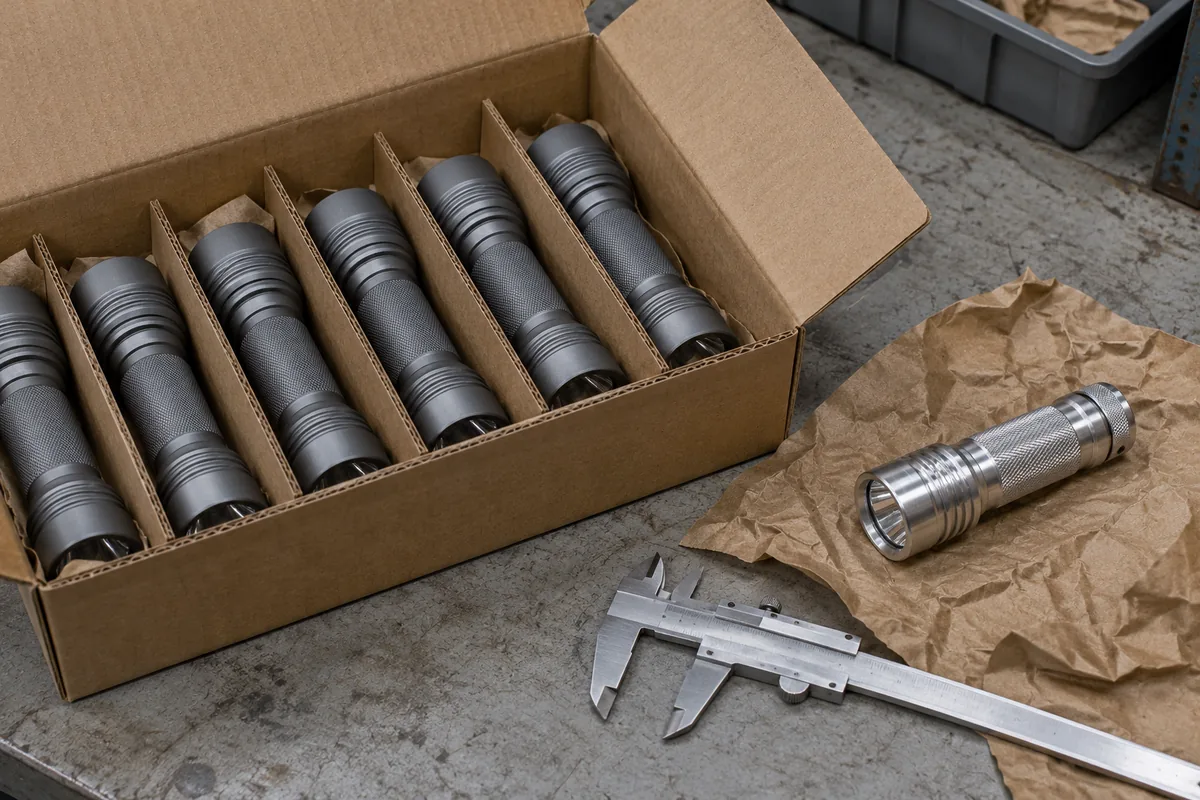
| Transit or unit damage | Photographs of crushed or punctured outer cartons before opening, inner cushioning, and all damaged units; retain original cartons and packaging materials | Damage reporting window, required photograph standard, return-label rules, and carrier vs seller risk allocation | Marketplace account portal, carrier cargo-damage claim portal, or the supplier contact named in the PO |
| Specification, finish, or labelling mismatch | Approved quotation and specification revision, sealed reference sample, side-by-side photographs of the delivered units and packaging, and lot count | Product specification attachment, sample-approval clause, substitution prohibition, and inspection/rejection terms | Seller’s authorized representative, third-party inspection coordinator, or platform dispute portal |
Takeaway: Do not treat two different symptoms as the same claim—a pre-shipment cancellation, a customs examination hold, and a post-delivery damage report use different documents, different deadlines, and different contacts.
Why should you freeze physical and order evidence before unpacking or relabeling?
Preserve the shipment in the condition it arrived until you have documented the discrepancy against the order baseline. Once outer cartons are discarded, inner packs are mixed into warehouse bins, or units are relabeled for marketplace fulfillment, you can no longer show whether the shortage, damage, or substitution occurred before or after delivery.
Assemble two sets of records before asking the counterparty for a remedy:
- The agreed baseline from before shipment:
- The purchase order or order confirmation showing the legal seller’s name, order date, SKU list, quantities, unit prices, and delivery window.
- The exact specification revision, packaging and barcode requirements, and the reference sample you approved before production.
- The agreed delivery term (such as EXW, FOB, or CIF) and the payment receipt or open invoice status.
- The arrival and discrepancy evidence:
- The carrier tracking log, bill of lading, or delivery receipt showing when the shipment arrived, how many cartons were signed for, and any external damage noted at handoff.
- Clear photographs of the outer master cartons, inner protective packaging, and all damaged or non-conforming units placed beside the approved reference sample or specification sheet.
- A carton-by-carton count separating conforming units that could be sold from quarantined units held for inspection, replacement, or return.
If your units are destined for Amazon FBA or eBay, hold the affected stock out of your active fulfillment inventory until the discrepancy is resolved. Sending mismatched or damaged units into a sales channel turns a supplier claim into a customer-return and account-health problem; see the channel-specific evidence checks for Amazon wholesale suppliers and eBay wholesale supply paths.
Why must you check the exact platform or contract reporting rule before messaging the seller?
Read the dispute, return, and cancellation clauses that govern your specific order before you send an informal email or chat message. A wholesale marketplace policy or a written purchase order often sets a strict reporting window, requires specific photographs, and processes claims only when submitted through a designated portal.
Faire’s Returns, Refunds and Cancellations Policy (marked Last Updated: April 7, 2026, captured on October 11, 2026; a repeat HTTP request on October 17, 2026 returned a browser security challenge rather than the article text) illustrates how tightly a platform rule can bind the reporting channel and clock for orders covered by that policy:
| Policy area in the Faire example (captured Oct 11, 2026) | What the Faire policy text states for covered orders | Why you must check your own order’s terms first |
|---|---|---|
| Order cancellation before shipment (Section 3) | A retailer may request to cancel an order within 24 hours of placing it if the order has not yet shipped or begun processing by the Brand, submitted via the Retailer Account portal. Once the order has shipped, it cannot be cancelled (though qualifying first orders may qualify for a return). | A cancellation request sent after processing starts, after shipment, or outside the account portal does not meet that rule. On a direct PO, cancellation depends on the contract’s own termination clauses. |
| Damaged or missing items deadline (Section 4) | If a product arrives damaged or a shipment is missing items, the retailer must report the issue within 14 days of receipt via the Retailer Account portal. If not timely reported, the product is deemed delivered and satisfactory. | Waiting until you unpack cartons weeks later can forfeit a claim under a receipt-based clock. Always copy the exact day-count from the policy or PO that covers your order. |
| Required proof and options (Section 4) | The retailer agrees to provide requested information, including accurate photographs of all damaged items, and has the option of choosing to replace the goods or cancel the order. | General complaints without photographs of all damaged items do not satisfy a documented photo requirement. |
| Follow-up and off-platform communication (Section 4) | The policy states it is the retailer’s sole responsibility to follow up with the Brand (which can be done through Faire Messenger) and releases Faire from liability for that dispute. Only issues reported through the Retailer Account on the Services are processed and shared with the Brand; if the retailer communicates with the Brand off the Faire marketplace platform, Faire is not responsible for subsequent activities related to the order. | Messaging a brand by private email or phone instead of filing in the required portal can leave the transaction outside the platform’s process. |
| Return condition and non-returnable items (Sections 1–2) | Qualifying first-order returns must be in new, unworn condition in original packaging with original tags, using a trackable shipping method and a Faire label where available; original outbound shipping fees are non-refundable, and customized items, testers/samples, single items from a bundle, final-sale items, used/altered items, and seasonal items are not eligible for return. | Unpacking, removing tags, or altering units after delivery can disqualify an otherwise eligible return. |
| Discretion and finality (Section 4) | Faire reserves the right to accept or reject any report in its sole discretion and to charge the payment method on file if it suspects fraudulent activity; Faire’s decision on a damaged or missing claim is final. | Filing a report follows a required procedure, but does not guarantee a refund or replacement. |
The Faire provisions above are a bounded example of one marketplace’s policy, not a general rule for wholesale trade. If you ordered directly from a manufacturer, distributor, or another website, Faire’s 24-hour and 14-day clocks do not apply to you. Open the confirmation, purchase order, or platform policy that actually governs your order, copy its deadline and portal into your log, and leave any unstated deadline blank until verified.
How do you separate a supplier delay, a carrier claim, and a U.S. customs hold?
Before blaming the supplier for a late or costly delivery, verify where the shipment is stopped and which party carries the task, cost, and risk at that stage.
Under the U.S. International Trade Administration’s Know Your Incoterms overview and the International Chamber of Commerce’s Incoterms® 2020 rules (both read October 17, 2026), the 11 ICC Incoterms rules define the responsibilities of buyers and sellers for shipping, insurance, documentation, customs clearance, and risk transfer, with all expected costs consolidated in article A9/B9 of each rule. When goods are damaged or delayed in transit, check the agreed three-letter term and named place in your contract (see EXW vs FOB vs CIF) to see whether loss or carriage fell on the seller or the buyer at the point where the incident occurred.
When an international shipment is delayed or billed at the U.S. border, U.S. Customs and Border Protection’s Tips for New Importers and Exporters (marked Last Modified: Aug 27, 2024, captured October 11, 2026 and re-read live on October 17, 2026) identifies four checks the importer must separate from a supplier breach:
- Commodity-specific entry and partner-agency requirements: CBP does not require a general importer license or permit, but other federal agencies may require a permit, license, or certification for the specific commodity being imported, and CBP acts in an administrative capacity for those agencies. If an order is held for missing commodity documentation, verify which agency requirement applies to your exact product.
- Importer of record responsibility even when using a broker: CBP guidance states twice that even when you consult or use a licensed customs broker, you, the importer of record, are ultimately responsible for the correctness of the entry documentation presented to CBP and all applicable duties, taxes, and fees. Hiring a broker or freight coordinator does not transfer legal responsibility for an inaccurate entry.
- Mandatory Importer Security Filing (ISF / “10+2”) for ocean vessel cargo: For cargo arriving in the United States by ocean vessel (effective since January 26, 2009; not applicable to other modes of transport), the ISF Importer or its agent must electronically submit advance cargo information to CBP before arrival. CBP states that failure to comply can result in monetary penalties, increased inspections, and delay of cargo.
- Physical cargo examination and Centralized Examination Station (CES) bills (
19 U.S.C. 1467and19 C.F.R. 151.6): Under19 U.S.C. 1467, CBP has the right to examine any shipment imported into the United States, and under19 C.F.R. 151.6,"The importer shall bear any expense involved in preparing the merchandise for CBP examination and in the closing of packages."While CBP does not charge for examinations in normal operations, a shipment selected for exam is generally moved to a privately operated Centralized Examination Station (CES), which unloads (devans) and reloads the container and bills the importer for devanning, movement, and storage—where a complete devanning may cost several hundred dollars, with rates varying across the country. - What to prepare before contacting a CBP port specialist: If you contact a CBP import specialist or entry specialist at the port of entry (or CBP INFO Center at
1-877-CBP-5511/ international202-325-8000, Monday–Friday, 8:30 a.m. to 5:00 p.m. Eastern Time), CBP advises having four transaction details ready:- Country of origin of the merchandise and manufacturer.
- Composition of the merchandise.
- Intended use of the item.
- Pricing and payment information to determine shipment value.
To see how examination, freight, and defect allowances affect your unit economics once documented, use the landed-cost calculation guide.
Record the issue on the blank unresolved wholesale problem log
Use one log per affected order so your team, your supplier, your platform support case, or your customs broker can trace every claim back to a specific document. Every answer cell starts blank because this guide has not audited your supplier, inspected your shipment, or read your contract. Do not invent a deadline, defect percentage, or refund figure to fill a row.
Download the blank wholesale order issue log (CSV). Keep your photographs, signed delivery receipts, PO revisions, and portal screenshots in a dated order folder and write their filenames into the log.
| Record group | Field to complete | What to copy into the cell | Your order entry |
|---|---|---|---|
| Order baseline | Order / PO identifier & date | Number and date on the purchase order or marketplace confirmation | blank |
| Order baseline | Legal seller & payee | Exact company name on the invoice/confirmation and payment receipt | blank |
| Order baseline | Approved spec & sample ID | Revision date of the specification and ID of the retained reference sample | blank |
| Order baseline | Delivery term & ship window | Agreed Incoterms® rule (with named place) and promised ship/delivery date | blank |
| Symptom & count | Observed issue category | Pre-shipment delay, customs/transit hold, shortage, damage, or spec mismatch | blank |
| Symptom & count | Affected SKUs & unit tally | Cartons signed for, conforming unit count, and quarantined/missing unit count | blank |
| Evidence saved | Carrier & POD record | Carrier name, tracking/BOL number, delivery timestamp, and POD damage/shortage note | blank |
| Evidence saved | Photo & packaging file names | Filenames of outer-carton, inner-pack, and side-by-side sample comparison photos; storage location of retained packaging | blank |
| Governing rule | Clause or policy section | Exact contract clause or platform policy title, section, and version date | blank |
| Governing rule | Stated reporting deadline | Exact notice or claim window copied from that clause (leave blank if unstated) | blank |
| Governing rule | Required portal or contact | Account portal URL, claims email, carrier intake, or broker contact required by the terms | blank |
| Import / customs | Importer of record & hold type | Named importer of record, broker contact, commodity agency requirement, ISF reference, or CES examination bill | blank |
| Escalation & status | Submission timestamp & case ID | Date/time report was filed in the required channel and ticket/reference number | blank |
| Escalation & status | Requested remedy & response | Replacement, credit, cancellation, or rework requested; counterparty reply and date | blank |
| Escalation & status | Unresolved balance & next owner | Disputed unit count/amount still open, next escalation path, and responsible person | blank |
Common mistake: Negotiating a partial discount in an off-platform chat while the formal portal claim window expires and the original outer cartons are thrown away.
When this troubleshooting log is the wrong tool
Stop and switch to the matching pre-order guide when your question is about preventing a problem on a future order rather than documenting an issue on an existing one:
- You have not yet checked whether a supplier is a real legal entity or verified its bank account: Use how to verify a wholesale supplier.
- You are comparing multiple candidate suppliers before placing an order: Use the supplier selection scorecard.
- You need to fix the product specification, packaging, and trade-term inputs before comparing supplier offers: Use the quotation preparation guide.
- You want to reduce first-order exposure before committing to a large production run: Use how to negotiate minimum order quantity (MOQ).
- You are appointing an intermediary to inspect goods or coordinate orders on your behalf: Set approval rights and exit handovers first in wholesale sourcing agent: authority, fees and order records.
- You need legal advice on a contract breach, customs protest, or formal dispute: Consult qualified legal counsel or a licensed customs broker in the relevant jurisdiction; this editorial worksheet organizes your transaction records and does not determine legal liability.
Method and sources
Updated October 17, 2026. This guide compiles public rules from three primary sources to show why post-order troubleshooting depends on the exact documents and channels governing the transaction:
- Faire Wholesale, Inc. Returns, Refunds and Cancellations Policy (
https://www.faire.com/support/articles/53980147426843), markedLast Updated: April 7, 2026and captured on October 11, 2026. A live HTTP check on October 17, 2026 returned HTTP 403 (browser challenge), so all references to Sections 1–4 (non-returnable items, return conditions, 24-hour pre-shipment cancellations, 14-day damaged or missing item reports via the Retailer Account portal, photograph requirements, and off-platform communication) are cited from the October 11, 2026 capture and scoped strictly to orders covered by that policy. - U.S. Customs and Border Protection (CBP), Tips for New Importers and Exporters (
https://www.cbp.gov/trade/basic-import-export/importer-exporter-tips), markedLast Modified: Aug 27, 2024, captured October 11, 2026 and re-read live on October 17, 2026. Used for commodity-specific partner-agency requirements, port import specialist inquiries, importer-of-record responsibility when using a licensed customs broker, ocean vessel ISF (“10+2”) requirements, and cargo examination costs and Centralized Examination Station (CES) devanning and storage billing under19 U.S.C. 1467and19 C.F.R. 151.6. - U.S. International Trade Administration, Know Your Incoterms (
https://www.trade.gov/know-your-incoterms) and International Chamber of Commerce, Incoterms® 2020 (https://iccwbo.org/business-solutions/incoterms-rules/incoterms-2020/), both read live on October 17, 2026, for how the 11 ICC Incoterms rules allocate tasks, costs (article A9/B9), and risks between sellers and buyers.
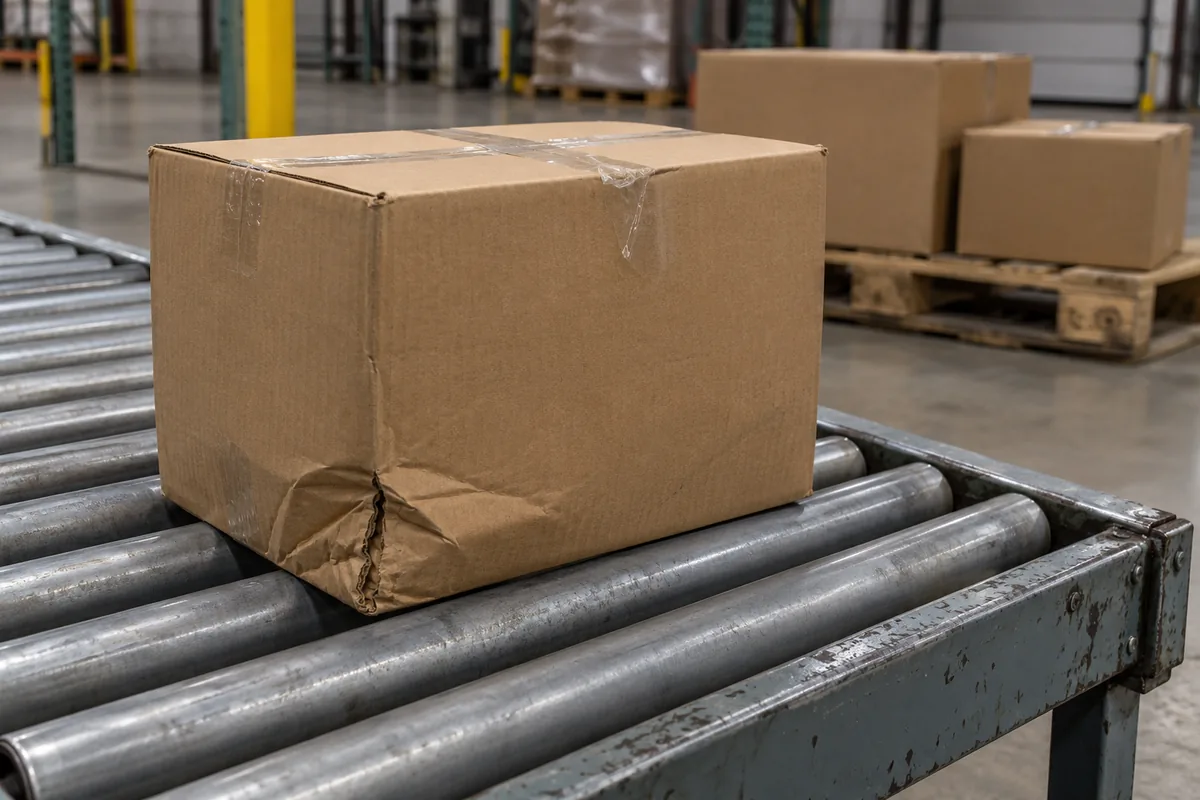
The triage matrix, the unresolved issue log, and the downloadable CSV are editorial templates with empty answer cells. No suppliers or marketplaces were tested, audited, or ranked. The photographs depict generic warehouse cartons and workbench items for editorial context and are not evidence from a supplier audit or customs inspection.
Frequently asked questions
What should I check first when a wholesale order arrives damaged or short?
Keep the outer cartons, packing materials, and inner packs intact, photograph the damage or count discrepancy alongside the delivery receipt and purchase order, and check the reporting deadline and required portal in the contract or marketplace policy that governs that order before altering the goods.
Does a marketplace damage-reporting deadline apply to a direct supplier purchase order?
No. A platform policy applies only to orders placed under that platform's terms. For example, Faire's 14-day damaged-or-missing reporting window and Retailer Account portal rule apply to orders governed by Faire's policy, whereas a direct purchase order depends on its own written inspection, notice, and trade-term clauses.
Who is responsible when an imported wholesale shipment is held for a U.S. customs examination?
U.S. Customs and Border Protection guidance states that even when you use a licensed customs broker, the importer of record remains ultimately responsible for the accuracy of entry documentation, applicable duties, taxes, and fees, and the expenses of preparing merchandise for CBP examination and Centralized Examination Station (CES) devanning and storage under 19 U.S.C. 1467 and 19 C.F.R. 151.6.
Sources
- FAIRE WHOLESALE, INC. RETURNS, REFUNDS AND CANCELLATIONS POLICY — Faire Help Center Accessed October 11, 2026.
- Tips for New Importers and Exporters — U.S. Customs and Border Protection Accessed October 17, 2026.
- Know Your Incoterms — U.S. International Trade Administration Accessed October 17, 2026.
- Incoterms 2020 — International Chamber of Commerce Accessed October 17, 2026.