
Direct answer
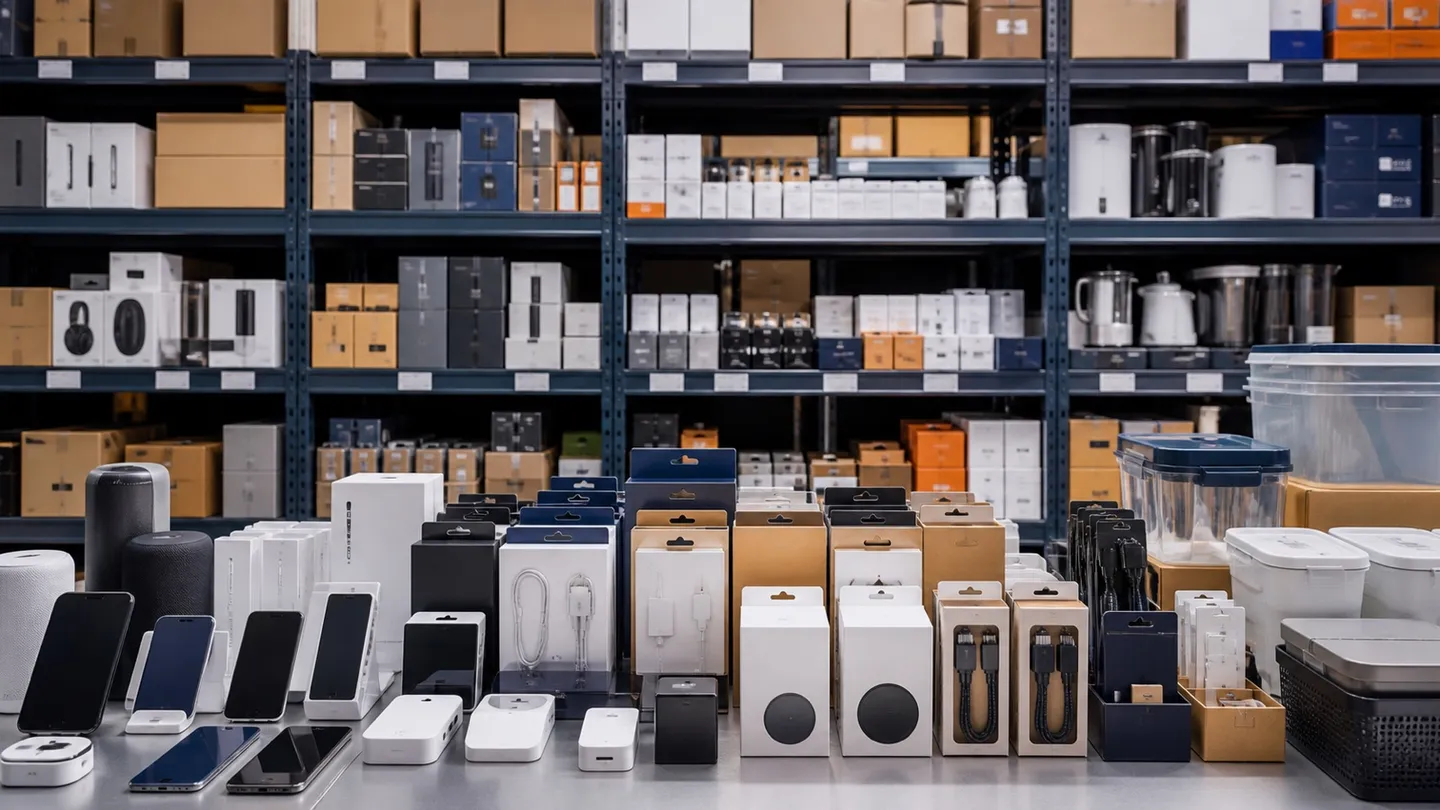
Distribution structure differs sharply by product category. Branded electronics move through tightly controlled authorised channels where permission is the scarce resource, while commodity accessories are made by interchangeable factories where specification control is the scarce resource. The category determines which checks are worth paying for.
Key takeaways
- Category decides whether your main risk is channel permission or specification drift.
- Verification effort should scale with unit value and counterfeit exposure, not be applied uniformly.
- Certification obligations follow the destination market and generally fall on the importer.
- In branded categories the binding constraint is who is allowed to sell to you; in commodity categories it is what you actually receive.
Sourcing advice that ignores product category is close to useless. The checks that protect you when buying branded smartphones are not the checks that protect you when buying phone cases, and running the wrong process wastes money in one direction while leaving you exposed in the other.
What actually differs between categories
| Category | Channel structure | Scarce resource | Main buyer risk |
|---|---|---|---|
| Branded electronics | Tightly controlled authorised distribution | Permission to sell | Grey market, warranty gaps |
| Mobile phones | Authorised and secondary markets side by side | Provenance | Condition, lock status, title |
| Accessories | Commodity manufacturing, many factories | Specification control | Silent component substitution |
The pattern is consistent: the tighter the brand controls distribution, the more your problem is access; the looser it is, the more your problem is quality.
In a controlled category, finding a supplier who will sell to you is the hard part, and once they do, the goods are usually what they claim to be. In a commodity category, a hundred factories will happily sell to you, and the hard part is ensuring the tenth order matches the first.
How to judge a product type before sourcing it
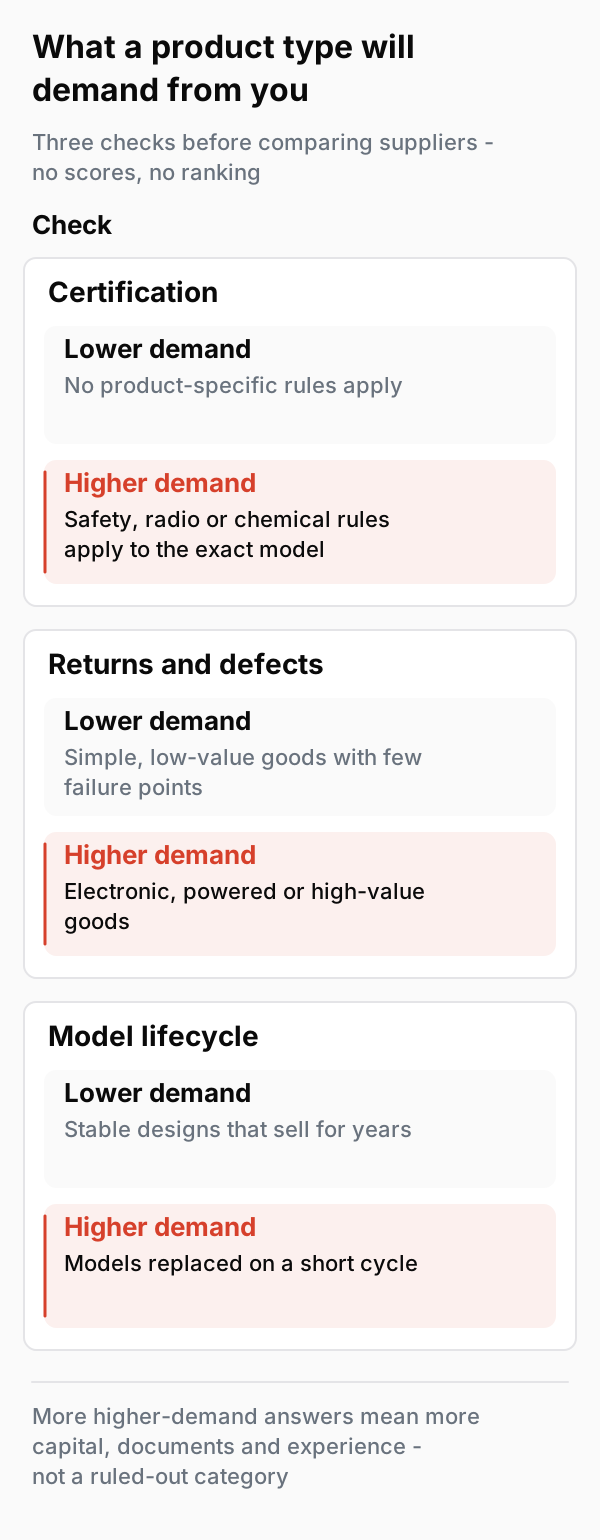
Before comparing suppliers, check the product type against four questions. They do not rank categories; they tell you which work the category will demand from you, and whether you can do that work at your current size.
| Question | Lower demand on the buyer | Higher demand on the buyer | What to check before ordering |
|---|---|---|---|
| Does the product need certification or testing for the market you sell in? | No specific product rules apply | Product-specific safety, radio, or chemical rules apply | Which rules apply in your destination market, and whether documents match the exact model you are buying |
| How exposed is it to returns and defects? | Simple, low-value goods with few failure points | Electronic, powered, or high-value goods where a defect or dispute is costly | How the supplier handles defects, and what your own returns policy will cost per sale |
| How long does a model stay current? | Stable designs that sell for years | Models replaced on a short cycle, so stock can lose value quickly | The current model and its replacement date, and how fast you expect to sell through |
| Does your sales channel restrict it? | The channel lists it without approval | The channel requires approval before the product can be listed | Your marketplace’s current restrictions before you buy stock |
A product type that falls on the higher-demand side of several questions is not ruled out. It needs more capital, documentation, or experience than one on the lower-demand side of all four, and that is worth knowing before the first order rather than after it.
Marketplaces can require approval before some products are listed. Amazon’s public selling fees page, for example, notes that certain cell phone devices may require approval. Check whether the exact product needs approval in your own marketplace account before committing to stock for that channel. For US product safety obligations, the CPSC’s business guidance is the starting point; confirm the rules for your specific product with a qualified adviser.
For clothing, use the wholesale clothing sourcing guide to record garment specifications, sample observations and first-order quantities by style, color and size.
The category guides on this site
- Consumer electronics: authorised channel access, end-of-line stock, and warranty and returns for branded goods.
- Mobile phones: new versus used stock, condition grading, and IMEI checks before payment.
- Mobile accessories: chargers, power banks, and phone cases, where specification control is the main risk.
Scaling verification to the risk
Applying identical diligence to every category is a common and expensive mistake. A workable rule is to scale with unit value and counterfeit exposure:
- High unit value, high counterfeit exposure — handsets, branded audio. Verify provenance per lot, not per supplier. Sample the actual stock rather than a prepared list.
- Moderate value, brand-controlled — most consumer electronics. Verify authorisation once with the brand, then rely on the channel.
- Low value, commodity — accessories. Verify the counterparty once, then put the effort into specification, retained samples and inspection.
The counterparty checks themselves do not change by category — those are covered in how to verify a wholesale supplier. What changes is how much of your effort belongs there versus in the goods.
Certification follows the destination
A device certified for one region is not automatically compliant in another. Obligations attach to the market where the product is sold, and they generally fall on the importer rather than the seller — an arrangement that does not transfer by private agreement.
Two failure modes recur:
- Certificate for the wrong market. Genuine document, wrong jurisdiction.
- Certificate for the wrong variant. Genuine document, different model number, often one character apart.
Both are worth checking against the specific model on your proforma invoice rather than against the supplier’s catalogue.
Which category to start in
For a seller entering wholesale, the choice of first category matters more than the choice of first supplier, because it determines which problems you will spend the next year solving.
- Start with commodity goods if you want a fast loop and low capital. Minimums are lower, suppliers are plentiful, and mistakes are cheap. You will spend your effort on specification and inspection.
- Start with branded goods if you already have a channel and can absorb thinner margins. Demand exists before you arrive, but access is gated and working capital requirements are higher.
- Avoid starting with high-value secondary stock. Handsets reward experience: grading disputes, provenance and title are expensive lessons at that unit value.
A useful test is which failure you could survive. If a bad lot of accessories is an annoyance and a bad lot of handsets is existential, that answers the question regardless of which margin looks better on a spreadsheet.
Where category-specific guidance sits
Each hub below covers the channel structure, the checks that matter, and the failure modes particular to that category. The general mechanics they build on — pricing, trade terms, landed cost and payment — are in buying guides, and the workflow that precedes any of it is in ecommerce sourcing.
If you are still deciding which layer of the supply chain to buy from, start with wholesale distributors for branded goods or wholesale suppliers for everything else.
Frequently asked questions
Why does sourcing advice differ so much between categories?
Because the scarce resource differs. In branded electronics the constraint is permission to sell, granted by the brand. In commodity accessories anyone can make the product, so the constraint is controlling what you actually receive against the approved sample.
How much verification is proportionate?
Scale it to unit value and counterfeit exposure. A pallet of phone cases does not warrant the diligence a pallet of flagship handsets does, and applying the same process to both wastes effort on one and under-protects the other.
Whose responsibility is product certification?
Generally the importer's. Certification obligations attach to the market where the goods are sold rather than where they were made, and a certificate issued for another region or another model variant does not transfer.
Sources
- Basics of importing and exporting — U.S. Customs and Border Protection
- Business & Manufacturing — U.S. Consumer Product Safety Commission
- How much does it cost to sell on Amazon? — Amazon Accessed October 6, 2026.