Direct answer
Find wholesale suppliers through B2B platforms, trade fairs, industry associations, referrals, and existing supplier networks. Use each channel to create candidates, then screen the same information for every candidate before you invest in samples or quotes.
Key takeaways
- Use several channels so that a single platform or referral does not determine the shortlist.
- Collect legal entity, product fit, MOQ, trade term, sample, and contact information in a consistent format.
- Platform badges, rankings, and supplier claims are starting points that still need verification.
- Send the same specification and quote request to each finalist before comparing offers.
- Treat vendor lists, directories and forum recommendations as sources of names, then screen every name the same way.
Finding suppliers begins with generating candidates. The next task is turning that list into counterparties you can compare on the same specification and verify before payment.
This article is about unbranded and private-label goods. Branded stock works differently — there the constraint is authorisation, and the route runs through the brand rather than through search. That is covered in how to find wholesale distributors.
Supplier types at a glance
“Wholesale vendor” covers several different businesses. Knowing which one you are looking for tells you which channel to search and what to ask in the first message.
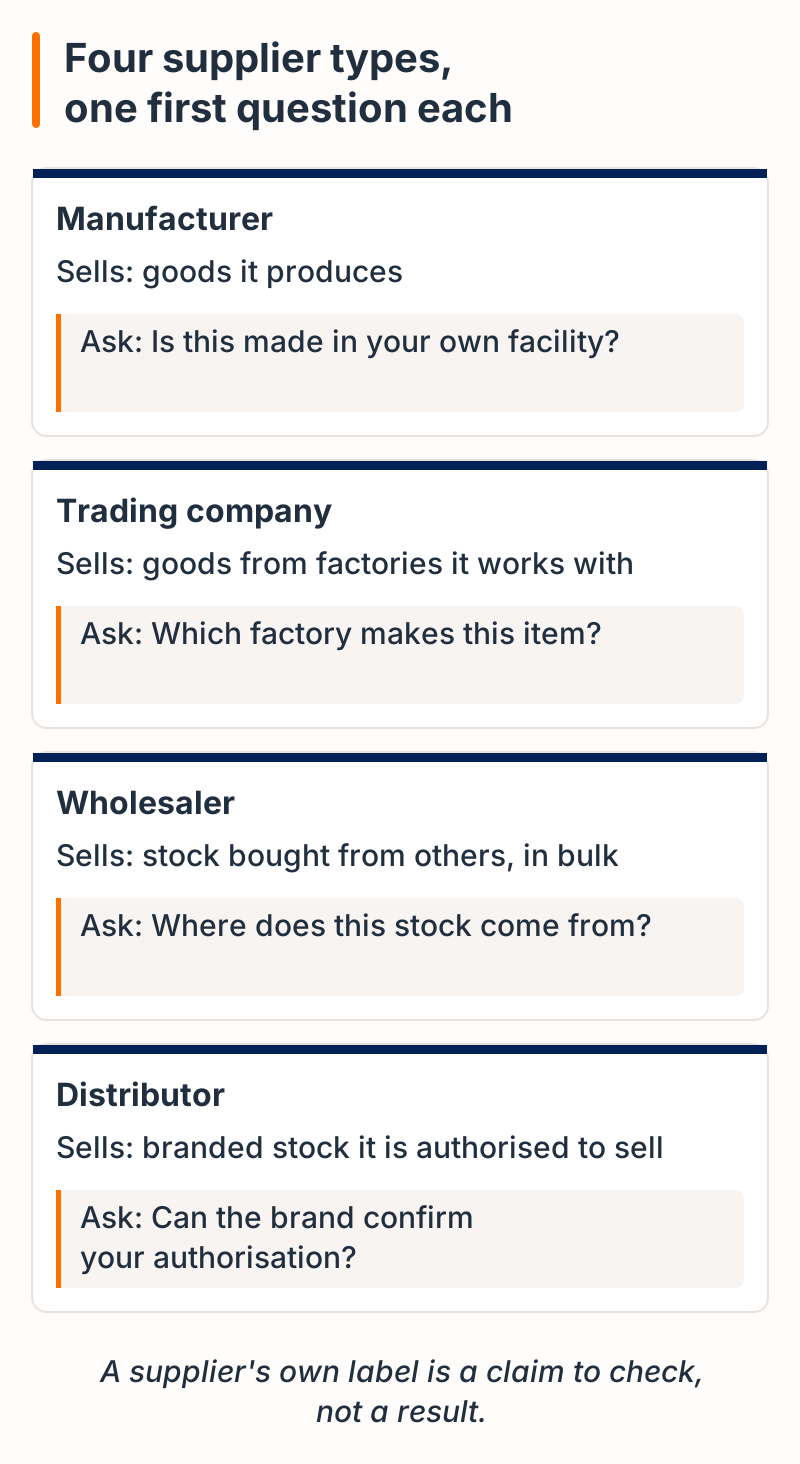
| Type | What it usually sells you | Fits when you need | First question to ask |
|---|---|---|---|
| Manufacturer | Goods it produces, to its own or your specification | A custom or private-label product at production-run volume | Is this product made in your own facility? |
| Trading company | Goods from one or more factories it works with | Smaller or mixed orders and help coordinating suppliers | Which factory makes this item, and who is accountable if it is wrong? |
| Wholesaler | Stock bought from others and resold in bulk | Lower minimums, mixed assortments, testing demand | Where does this stock come from? |
| Distributor | Branded stock it is authorised to sell | Branded goods you will sell as branded | Can the brand confirm your authorisation? |
A business can fill more than one role, and its own description is a claim to check, not a result. The differences in control and accountability are set out in manufacturer vs wholesaler vs distributor.
Compare channels before contacting suppliers
| Channel | Useful for | Evidence to collect | Limitation to keep in mind |
|---|---|---|---|
| B2B platforms | Building an initial candidate list | Legal entity, product range, MOQ, location, contact | A listing, badge, or ranking does not verify the transaction |
| Trade fairs | Viewing samples and discussing requirements | Product notes, named contact, company details, follow-up quote | A meeting does not replace document and payment checks |
| Industry associations or directories | Finding sector-focused members | Membership, legal entity, product fit, contact | Membership scope and screening vary by organisation |
| Referrals | Identifying a source someone else has used | Referrer’s relationship, exact product, dates, and role | Their order and requirements may differ from yours |
| Existing suppliers | Finding adjacent capabilities or regions | Introduced entity, product fit, commercial role | An introduction is not a verification result |
Record each candidate in a consistent shortlist while the information is fresh. The goal is a list you can screen, not a collection of unstructured contacts.
Local suppliers you can visit
A wholesaler or distributor in your own country, or one you can reach for a visit, usually costs more per unit than an overseas factory. It can still be the better source when you need low minimums, fast resupply, or the chance to inspect stock before buying. If you sell in the United States, that means weighing USA wholesale suppliers against overseas production on total cost and lead time, not unit price alone — the trade-off is set out in domestic vs overseas sourcing.
Why a ready-made wholesale vendors list is not a shortlist
Free and paid vendor lists, directories, “top suppliers” articles and forum recommendations all promise to skip the search. They can supply names. They cannot tell you whether a supplier fits your specification, your volume or your market, and most do not say how entries were screened.
Reasons to treat any list as a source of candidates only:
- Screening is unknown. A list rarely states what was checked, when, or whether a listing was paid for. Ask before relying on it.
- Entries go stale. Contacts, legal entities and payment details change; a list shows the state on the day it was compiled.
- Fit is not tested. A supplier that suits another seller’s product, volume or market may not suit yours.
- Roles are blurred. Lists mix manufacturers, traders and wholesalers under one label, so the price and accountability you expect may not match the business you contact.
Handling the sources you do use:
- Paid directories. Ask what the fee buys: verification of the entries, or access to the list. Then run the same checks on every name you take from it.
- Forum and community recommendations. Ask what was bought, when, in what quantity, and whether the recommender has a commercial link to the supplier. Record the answer as context, not evidence.
- Online marketplaces and platform listings. Note the legal entity behind the listing, not only the store name, and keep the link with the date you viewed it.
Each name that survives goes into the same shortlist format below.
Build a shortlist that you can verify
For every candidate, capture the legal entity claimed, website or directory source, product and specification fit, MOQ or MOV, trade term, sample availability, primary contact, and the evidence still needed. The supplier verification checklist provides a starting record for the due-diligence stage.
Do not treat a platform ranking, badge, polished website, referral, or supplier-provided certificate as sufficient proof by itself. Each is a starting point for checks on the exact legal entity and proposed transaction.
Filtering the long list
Use the same quote request and specification for each candidate. This makes the replies easier to compare and reveals which fields still need clarification.
Send the same specification to everyone and read what comes back:
- Did they answer the specification, or send a catalogue? Record which required fields were answered and which were omitted.
- Did they ask a clarifying question? Clarifying questions can reveal that the specification needs more detail before quotes are comparable.
- Did they quote the quantity you asked for, at the trade term you asked for? Substituting different terms without saying so means the offer needs clarification before comparison.
- Is the price plausible? A quote far from the others may reflect a different specification, cost assumption, or commercial model. Ask for a written breakdown or explanation.
Select finalists based on documented fit, responsiveness, commercial terms, and the checks you can complete before an order. Then move to samples and verification.
What to send them
The filter only works if everyone received the same thing. That means writing the specification before contacting anyone — materials, tolerances, packaging, certification, quantity break points and trade term. The full workflow is in ecommerce sourcing, and the request mechanics are in how to request a wholesale quotation.
Asking for prices before writing a specification guarantees five prices for five different products, and the cheapest will be the one that assumed the least.
Establish what kind of business each one is
A supplier’s own description should be checked against the evidence you collect. Before quoting time goes any further, establish whether you are talking to a factory, a trader, or a stockist — they have different roles in the supply chain. The distinctions are in manufacturer vs wholesaler vs distributor.
The MOQ, setup charge, and availability can help frame questions about the supplier’s role, but they are not conclusive. See what is MOQ.
Then verify
Finding and qualifying are different jobs. Once a supplier is on the shortlist, record and check legal registration, payment instructions, trading evidence, and physical-verification needs before payment. That sequence is in how to verify a wholesale supplier.
Where to go next
Start from wholesale suppliers for the wider picture, or go straight to how to request a wholesale quotation if you already know what you want made.
Frequently asked questions
Are supplier badges on B2B platforms meaningful?
They may help you filter a large list, but they do not establish that the exact entity, goods, or payment instructions are suitable for your order. Verify those separately.
How many suppliers should I contact?
Contact enough suppliers to obtain several comparable responses within the time you can manage. Start with a shortlist you can document and verify rather than a large list you cannot follow up.
Is it worth attending a sourcing fair for a small order?
It can be useful when you need to compare products, ask technical questions, or meet a concentrated group of suppliers. Weigh the travel and time cost against the category and the orders you expect to place.
Sources
- International Trade Administration — U.S. Department of Commerce
- Basics of importing and exporting — U.S. Customs and Border Protection